
Danville Neighbors: Block Sources
A block question needs more than one record set. The County Assessor and GIS system describe land, the Recorder preserves instruments, and Town files add zoning and project history. Historical directories and community collections can place people at an address for a stated year. California voter data follows a separate statutory path.
| Source | What It Shows About a Block | Access |
|---|---|---|
| CCMAP parcel viewer | Adjacent parcel shapes, APNs, characteristics, aerials, contours, and radius selections | Free online; County web tools omit owner names |
| Assessor public roll | Assessed ownership, mailing and situs fields, values, and parcel details | Public counter or roll inspection; owner names omitted online |
| Clerk-Recorder index | Grantor and grantee, recording date, instrument number, and legal description in the image | Online search and ordering, phone, or Martinez counter |
| Danville Pioneer and Town files | Zoning, parcel reports, permits, code chronology, and project participants | Free portal or focused records request |
| Community and historical sources | Public contacts, old listed occupants, local groups, newspapers, and neighborhood context | Town, library, and History Center channels |
| California voter records | Only permitted registration fields for an authenticated or approved purpose | Individual lookup or statutory application, never casual browsing |
Owner and occupant are different facts. A deed identifies parties to a transfer. An assessment record points to ownership and a mailing lead. A reverse directory may name one listed person in its publication year. None proves that every person present on a Danville block is named, registered, or connected with a parcel.
Map Danville Neighbors by APN
The free CCMAP viewer is the best first pass for an adjacent-parcel question. Locate the exact address, switch from a street label to the parcel shape, and save the APN. If an address does not match, try the APN or a normalized street form in the County property tools. The map can add aerial imagery, contours, a parcel-map PDF, and a radius selection. A block survey should record APNs rather than people.
- Anchor the address. Open CCMAP and select the target parcel. Note the APN, lot or subdivision wording, situs address, and map view.
- Walk the boundary. Zoom until parcel lines are clear, then click each touching polygon. Record adjacent APNs and keep the target parcel distinct from nearby lots.
- Compare the parcel card. Check assessed value, lot size, building square footage, aerial view, contours, and any downloadable map. GIS layers and downloads are updated monthly.
- Resolve ownership lawfully. Use the public assessment roll at the Assessor counter or recorded documents when an owner connection is needed. Do not treat the web map as a name list.
- Choose the radius option. CCMAP supplies a free online radius workflow. The Assessor counter offers a staff-produced radius search for $50 when a documented parcel set is needed.
The $50 staff option and the free CCMAP tool serve the same block research from different access points. The counter product is useful when a formal parcel set is needed, but the fee and office process should be confirmed before a visit. For a whole named street, the Danville street directory follows the longer address chain.
Official Records for Danville Neighbors
Official rolls have a named custodian and defined record series. Commercial neighbor tools are different. They may offer an unverified lead, but they do not replace the County map, assessment roll, Recorder index, or Town file. A compiled result can seem more complete than official web tools.
| Source type | Useful first signal | Why it needs care |
|---|---|---|
| County GIS and assessment roll | APN, parcel shape, values, mailing or situs context, and lawful ownership access | Owner names are omitted from the web tools; a parcel is not an occupancy list |
| Recorded documents | Grantor, grantee, instrument, date, and legal description | A title party may not live at the parcel; the index is not the full image |
| Town zoning and permit files | Land-use report, work scope, applicant, contractor, status, and dates | Work at an address does not prove a household connection |
| Commercial neighbor tools | Compiled name, address, or association clues | Data can merge names, lag changes, and hide its source; verify with the custodian |
The commercial category should never become a published block roster. Preserve the source date, APN, document number, or office response instead. If a compiled entry conflicts with an official record, the conflict belongs with the office that holds the assessment, deed, permit, or other source record.
Danville Community Sources Near Home
Some block context comes from public community channels rather than an ownership roll. The Town neighborhood resource page can point to public area context, events, and official contacts. It does not stand in for a membership file. The Town did not publish a comprehensive HOA/member-directory inventory. Private rosters are not to be reproduced.
| Public resource | Useful block context | Boundary |
|---|---|---|
| Town of Danville neighborhood resources | Public neighborhood names, geography, programs, events, and official contact paths | Confirm the area and association directly; no complete private roster |
| Danville Library and San Ramon Valley Genealogical Society | One-on-one help with directories, newspapers, obituaries, and census interpretation | Historical research assistance, not a current household list |
| Contra Costa History Center | Danville people, schools, churches, organizations, structures, real estate, and the 1871 voter list | Archive and catalog research; older community evidence |
| Public organization contacts | Officially published event, service, or community contact information | Affiliation does not prove a home address; private rosters need consent |
Neighborhood pages can identify which public channel covers part of Danville. A community contact can show participation in an activity or service, not who lives in a home.
Note: A published address identifies an organization’s contact channel, not a complete list of households.
Danville Voter Files and Neighbors
California’s My Voter Status tool is an individual verification channel. It asks for matching identity details and returns a person’s own registration information. It is not a public surname search for a block. Broader voter files can contain names, registration dates, residence and mailing addresses, precinct data, party preference, and election participation history, but release is limited by Elections Code §2194 and Government Code §7924.000.
The Secretary of State permits specific election, scholarly, journalistic, political, or governmental uses subject to an application, safeguards, and the stated fee schedule. Personal curiosity is not a substitute for an approved purpose. Driver license data, Social Security numbers, signatures, Safe at Home records, and designated safety records remain protected. Voter files are not casual neighbor browsing.
The Secretary of State’s voting-record disclosure guidance shows the legal boundary behind the California voter-record channel.
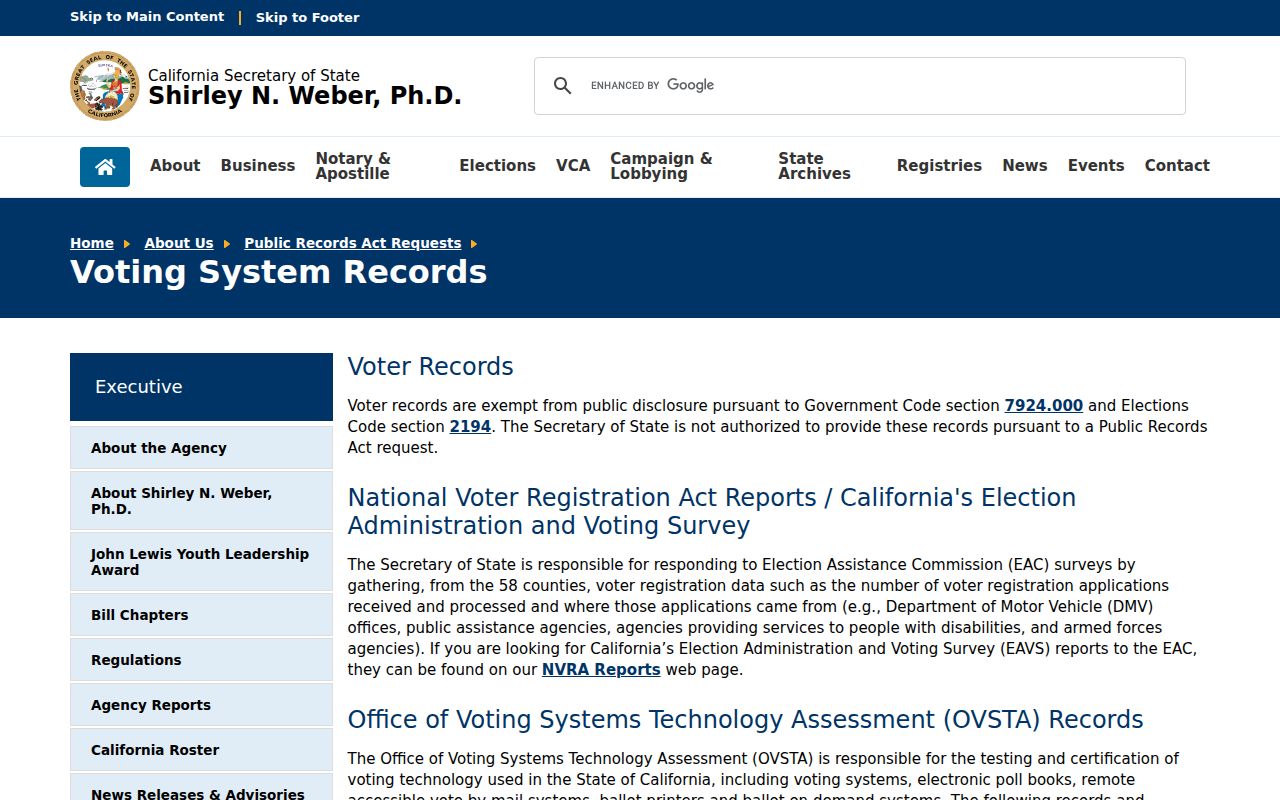
The disclosure rule keeps a block survey focused on parcels and lawful source requests instead of an improvised list of registered people.
Protected Danville Neighbor Information
California’s Safe at Home program creates a substitute mailing address, mail forwarding, confidential voter registration, and related protections for eligible survivors and witnesses. The official Safe at Home guidance explains that Government Code §§6205-6211 can affect how an eligible participant appears in public records. Confidential voter provisions include Elections Code §§2166.5 and 2166.7. The program does not erase records that already exist, and a public web result should not be used to defeat the program.
Other private details stay outside a normal Danville neighbor lookup. Utility customers, delivery records, DMV addresses, guests, minors, and all people present at a parcel are not supplied by CCMAP. Private association, congregation, club, and block-watch rosters should not be copied unless the organization deliberately publishes an official contact listing.
The official California Megan’s Law registry is a distinct public-safety record set with its own search warnings and statutory exclusions.
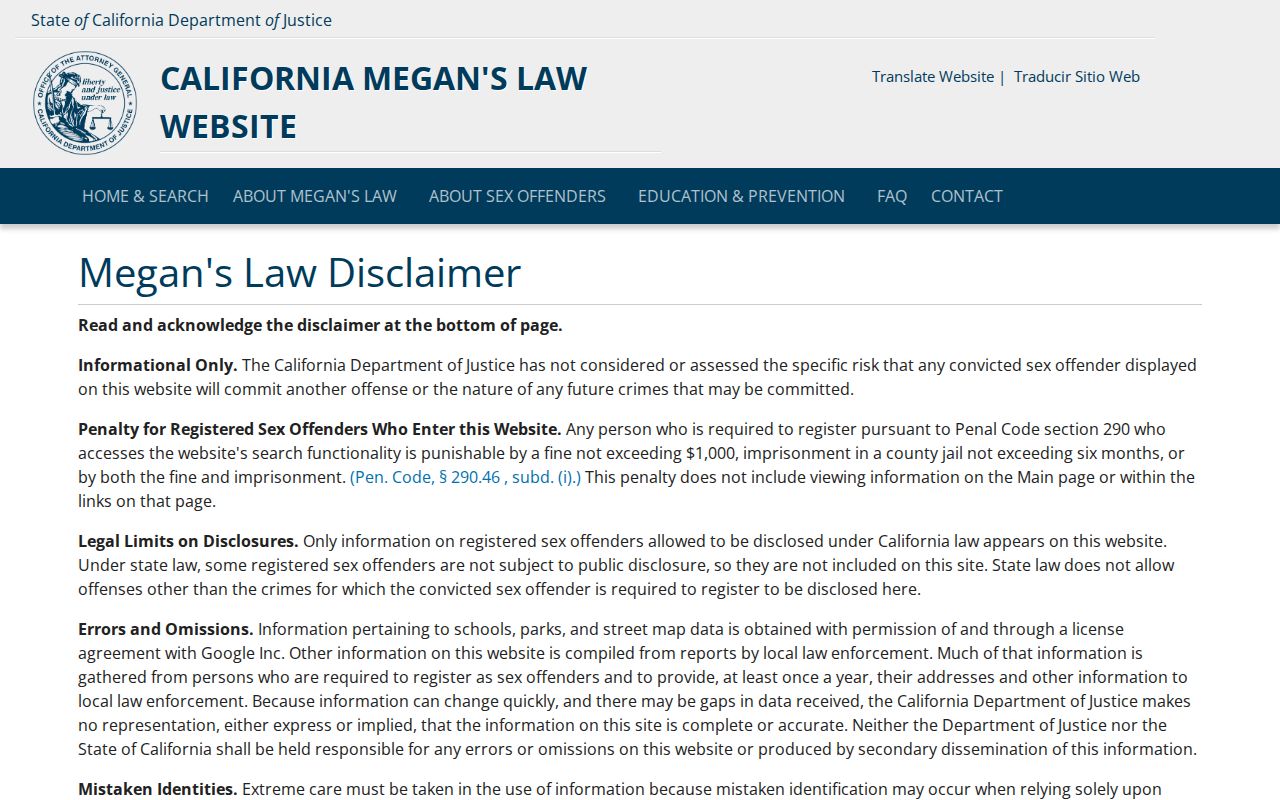
A registry search is not a general block directory. Its warnings reinforce the need to avoid harassment, intimidation, or attempts to expose a protected person.
Lawful personal use. Use Danville neighbor and parcel records for family history, civic research, property questions, or personal safety awareness. Do not use an address trail to stalk, harass, threaten, intimidate, or harm anyone.
Danville Zoning Around a Block
The Town’s Danville Pioneer zoning map states that a search can use an APN, address, or owner name and return a zoning-district report. Use the APN from CCMAP, compare the situs address, and keep the report tied to the same parcel. The owner-name option is a discovery lead, not proof that a person occupies the site.
The Town Building Division supplies an address-keyed route for permit and project records. A focused request can use the street address, APN, permit number, project type, issue or final date, applicant, or contractor. Public fields may show scope, status, valuation, inspections, and dates. Code records may add notices and final orders, while a complainant’s identity may be withheld.
Note: Permit and zoning records date work on land; they do not identify every person connected with a block.
Danville Neighbors in Older Records
Current parcel tools are not the only way to understand a Danville block. The library’s newspaper holdings run from the Danville Journal of 1914 through May 11, 1918, then the Contra Costa Courier & Danville Journal from May 31, 1918 through September 1930. Valley Pioneer and Valley Times holdings extend the record into later decades. Search by address, subdivision, road, or family name, and keep the issue date with each clue.
The History Center’s Danville folders include people, schools and original school material, churches, organizations, structures, government, the post office, real estate and development, and a specifically labeled 1871 voter list. Older sources may use “San Ramon Valley” or “Contra Costa” instead of the modern postal city. A reverse or criss-cross directory can name a listed occupant for one year, but exact Danville publisher and year runs were not verified in the official online catalog. The Danville city directory collections page carries the historical-shelf method.
Historical community evidence can date a street or subdivision, but it is not a current identity claim. Keep the title, year, page, address wording, and archive reference for later deed or parcel testing.
Limits of a Danville Neighbor Search
No Danville neighbor search reliably shows every person at a parcel. A public record can omit owner names online, show only a title party, or describe work done by an applicant or contractor. A mailing address may point outside Danville, and a 94506 postal label may fall outside incorporated Town jurisdiction. Keep municipal boundary, situs, mailing address, APN, owner, and occupant as separate fields in the research notes.
- APN
- The Assessor’s Parcel Number, a county identifier that links a mapped parcel with assessment and deed research.
- Radius search
- A GIS or staff-selected group of parcels within a distance from a target parcel, not a list of people.
- Owner mailing address
- The destination for assessment notices, which may differ from the parcel’s situs and does not establish occupancy.
- Occupant clue
- A dated directory, newspaper, or other source that connects a person with an address for a stated time, without proving current presence.
When a result is missing or conflicts with another source, return to the custodian that created it. A focused request, counter inspection, or library referral is safer than filling a gap with an assumption. The strongest block survey records APNs and source dates first, then uses only lawful, corroborated context about Danville neighbors.
Note: A blank web result often reflects a publication limit, not proof that no record exists elsewhere.