
Danville Previous Residents by Era
Past residents of a Danville address leave different kinds of evidence in different periods. The Recorder can establish an ownership chain, while a directory or census can place people at a house. Newspapers add events and relationships. Permits date work at the parcel. The coverage table keeps those roles separate and labels gaps not verified in public online descriptions.
| Source | Years It Covers | Where Held | What It Shows |
|---|---|---|---|
| Recorder deeds | County formation era to present; exact online cutoff not officially stated | Clerk-Recorder, Martinez | Ownership chain and legal description |
| Danville newspapers | 1914 to 1930 early title run; later Valley papers through current holdings | Contra Costa County Library | Occupants, sales, society news, and obituaries |
| Federal census | 1790 to 1950 public under the 72-year rule | NARA, Ancestry, FamilySearch, and library access | Household at a census address |
| Danville Voter List | 1871 | Contra Costa History Center | Early adult voters tied to the community |
| City and reverse directories | Exact Danville run not published online | Library and History Center | Annual or reverse listed occupants |
| Building permits | Town archive; exact start not published | Building Division and CPRA request route | Construction and alteration dates |
| Parcel and aerial GIS | Current; downloadable data updated monthly | CCMAP and Town GIS | Spatial continuity and adjacent lots |
| Sanborn maps | Exact Danville years not verified | Library of Congress and library inquiry | Footprint, use, and address history |
Start with the source that matches the question. A current parcel needs APN and deed work. A household question needs directories, newspapers, or census. A construction question needs permits and maps. When a source is only partly online, use its online index as a lead and then move to the counter, library, archive, or request channel named in the record trail.
Danville Address History Starts With an APN
An address is a useful starting label, but the Assessor's Parcel Number is the stronger bridge between a present parcel and older documents. Search the address in the County's ParcelQuest Lite or CCMAP tools, capture the APN, parcel shape, characteristics, assessed value, and subdivision or lot reference, then keep that identifier with every later deed image. Vacant parcels or old addresses may fail in a street search, making APN and legal description more reliable than postal wording.
Address → APN → legal description → current deed → prior grantor → directories and census.
The County's Maps and Property Information page explains the address and APN search route. County web tools do not display owner names, even though ownership remains part of the public assessment roll. Danville Pioneer states that it can search by APN, address, or owner name and return a zoning report, but an owner label is a lead to verify through the roll or recorded deed. The Danville street directory handles the broader present-day address chain, while previous-resident work keeps the parcel fixed as the trail moves backward.
Trace Danville Records Back Through Deeds
The Contra Costa County Clerk-Recorder's Recorded Documents Search and Ordering gateway is the first online stop for deeds, deeds of trust, reconveyances, liens, notices of default, easements, plats, maps, and other instruments. Work grantor to grantee in reverse time: find the current owner's acquisition, identify the seller, then search that seller as an earlier grantee. The deed image matters because the index may not carry the full legal description.
- Obtain the current assessed owner through lawful roll access or a recorded deed lead, and save the APN and legal description.
- Find the acquisition deed as grantee. Record date, instrument number, document title, and party roles.
- Read the image, identify the seller or grantor, and search that person or entity as an earlier grantee.
- Check the same APN, lot and block, subdivision, or legal description in every image.
- At the web cutoff, ask the Martinez counter for index books, deed books, images, or microfilm. The exact cutoff is not published.
- Overlay deeds with directories, newspapers, and census records to identify occupants without equating owner and resident.
- Grantor
- The person or entity transferring an interest in the recorded instrument.
- Grantee
- The person or entity receiving that interest in the instrument.
- Chain of title
- The linked sequence of recorded transfers used to follow ownership through time.
- Legal description
- Lot, block, subdivision, or metes-and-bounds language that identifies the land even when a street label changes.
The Recorder search and ordering gateway can lead to an index result and copy order, but an index alone does not establish title or occupancy. Preserve the image reference and map-book terms for later newspaper, permit, or parcel work.
Danville Past Residents and the Recorder Cutoff
Contra Costa County's Clerk-Recorder is at 555 Escobar Street, Martinez, with mail through P.O. Box 350 and phone 925-335-7900. Posted hours are 8 a.m. to 4 p.m. Use the office for older index books, bound volumes, microfilm, maps, images, and copies when a Danville deed is not online.
The public landing page does not state the year the Recorder's online index begins. Call before travel and ask whether the target year is online, imaged at a terminal, or only in a bound or microfilm index. A focused CPRA request may fit an identifiable administrative record, but ordinary recorded documents generally follow the Recorder's copy process.
Check current payment instructions before ordering. If the web search is blank, save the terms and date, then test counter and library channels. Note: A blank web result is not proof that no deed exists; test the index year and the custodian's alternate access channel.
Danville Directory Clues for Past Residents
Danville newspapers can place a past resident between deed events. Danville Journal ran 1914 to May 11, 1918; Contra Costa Courier & Danville Journal ran May 31, 1918 to September 1930. Online portions cover May 31, 1918 to June 1922 and August 1922 to December 1923. Walnut Creek film covers the earlier and fuller runs; Valley Pioneer and Valley Times extend the trail later.
Search notices, real-estate ads, society items, obituaries, and school news by date and address. OCR can miss narrow columns, so browse when a name fails. Use “Danville,” “San Ramon Valley,” and “Contra Costa.” Pair any sale, relationship, or event with a deed, directory, census, or probate source.
The exact city or reverse-directory run was not published online. Ask the library or History Center for a shelf check, and preserve the title page, year, key, page, and entry. The Danville city directory collections page describes those sources; this page uses them in the address trail.
Danville Households Across Census Years
Directories and census schedules answer a different question from deeds. A directory may list an occupant, spouse, occupation, and address for one edition. The federal census supplies a decennial checkpoint, with public schedules through 1950 under the 72-year rule. Pairing the two shows who was associated with a Danville address even when ownership did not change.
Directory entry → street or criss-cross check → nearest census → newspaper, probate, cemetery, or deed follow-up.
- Choose the closest city, telephone, or reverse directory and preserve its title page and key.
- Record surname, initials, spouse or widow mark, occupation, and exact address.
- Use the criss-cross section for other listed people, without assuming completeness.
- Pair the result with the nearest decennial census through 1950, noting address and household members.
- Close gaps with newspapers, obituaries, cemeteries, probate, marriage notices, or deeds.
A missing name may reflect a move, death, omission, or unavailable edition. A missing address calls for the legal description, subdivision map, newspaper, or later reverse directory. The year of any townwide street realignment or renumbering was not verified, so the legal description is safer.
House-history use. Previous-resident research is appropriate for family history, a lawful house history, estate work, and personal records review. Do not use a name or address trail to stalk, harass, threaten, or track a living person.
Danville Records Date Buildings, Not Residents
Danville Building Division files date construction and alteration. Search or request by address, APN, permit number, project type, issue or final date, and applicant or contractor. Fields may include scope, status, valuation, owner, applicant, contractor, inspections, and dates. Older paper permits may need a targeted request.
The Town's Building and permit services page is the access point. A permit proves involvement with work at an address, not continuous residence or every household member. Code-enforcement dates can help, while complainant identity may be withheld.
Use permits to date a building or alteration, then compare deeds and household sources.
Danville FBN Records for Past Residents
A business or estate clue can separate people with the same name, but a filing is not a home-residence record. Contra Costa Fictitious Business Names are county filings. Results may show a fictitious name, registrant or business address, and filing or expiration information. Compare the name, date, and address with a deed, obituary, probate notice, or directory.
The Contra Costa FBN search is the manifest source for this Danville address-history image.
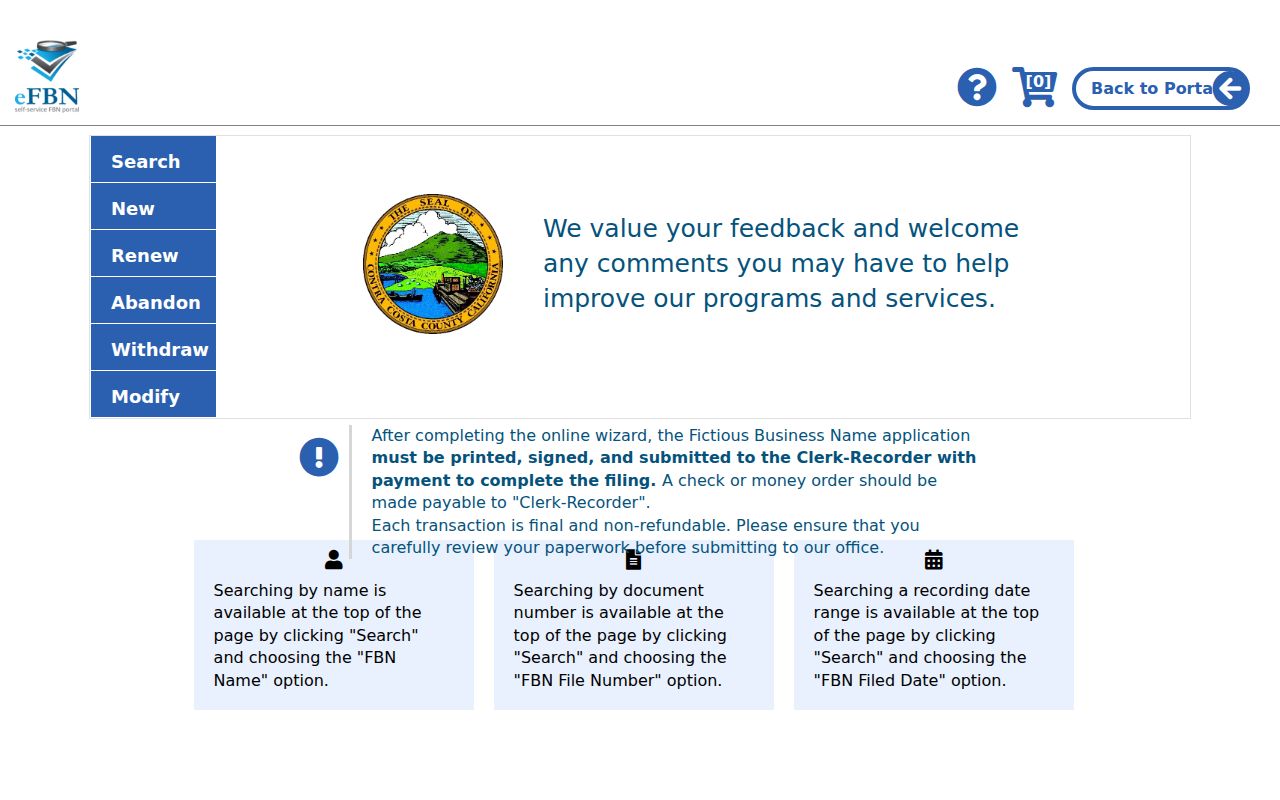
An FBN can provide a stable business name or filing date to distinguish people, but it cannot prove residence at the listed address.
The Contra Costa County Clerk services page is the manifest source for the county filing and vital-record access image.
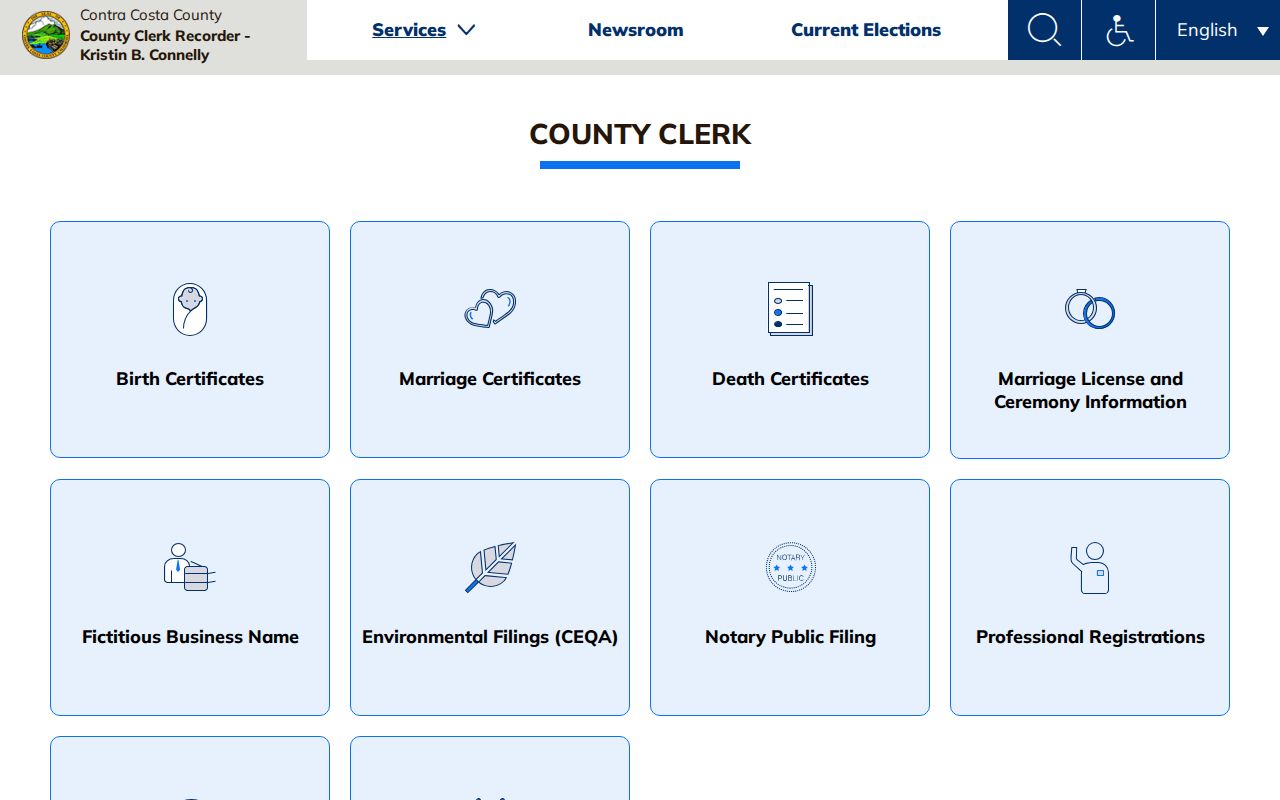
The County Clerk route covers vital copies, marriage licenses, fictitious business names, notary filings, and other public filings. A permitted death or marriage record, newspaper notice, cemetery record, or probate file can close a trail, subject to access rules.
Danville Records Before Townhood
Contra Costa County was one of California's original 27 counties in 1850, and Martinez remains the county seat and physical destination for core deed, assessment, and court records. Danville incorporated in 1982. Earlier municipal-type evidence is therefore more likely to sit in county records, newspapers, school and district archives, maps, and community collections than in a modern Town series.
Local geography can explain changing address terms. Hartz Avenue and Railroad Avenue mark the historic commercial and former rail corridor, while Camino Ramon, Sycamore Valley Road, Diablo Road, and Camino Tassajara connect later development. A deed may use a ranch, tract, subdivision, creek, or road description. Preserve the legal description and map-book reference.
Four details remain unverified: the exact Recorder online cutoff, the exact city or reverse-directory run, Danville Sanborn sheet years, and the year of a townwide street realignment or renumbering. No official source located for this build supplies those dates. Test each gap through the Martinez counter, library shelf checks, History Center files, and parcel maps.